The U.S. Department of Labor’s Occupational Safety and Health Administration (OSHA) has awarded approximately $11.2 million in Susan Harwood federal safety and health training grants to 90 nonprofit organizations nationwide. The grants will provide education and training programs to help workers and employers recognize serious workplace hazards, including the coronavirus, implement injury prevention measures, and understand their rights and responsibilities under the Occupational Safety and Health Act of 1970. Under President Trump’s Qualified Opportunity Zones […]
Read MoreArticles by Waste Medic
OSHA cites Massachusetts dental practice for respiratory protection violations
The U.S. Department of Labor’s Occupational Safety and Health Administration has cited Georgetown Dental LLC in Georgetown, Massachusetts, for violating respiratory protection and other standards, according to an OSHA news release. OSHA cited the dental practice for six serious violations and one other-than-serious violation, with proposed penalties of $9,500, the release stated. The company has paid the penalty in full and abated the citations. OSHA cited the dental practice for failing to provide medical evaluations […]
Read MoreWaste generation by hospital emergency departments is highlighted for first time
Emergency departments of hospitals generate significant amounts of environmentally harmful waste which could be reduced through basic changes to disposal policies and practices, while producing lower operating costs, researchers from Massachusetts General Hospital (MGH) have found. Efforts to optimize the daily waste stream through improvements such as switching from disposable to reusable items in the ED, better sorting of infectious waste, and more effective recycling of items like glass and aluminum could have meaningful impact […]
Read MoreHow do you fix healthcare’s medical waste problem?
Coronavirus has made medical waste more visible than ever, but the environmental footprint of healthcare goes much further – and reducing it could save lives. When surgeon Claire Teves* (not her real name) landed in Singapore from the Philippines for a six-month fellowship, she knew it would take some time to adjust. Teves had come from a hospital serving the needs of a poorer developing society, to work in a cutting-edge medical facility in a […]
Read MoreCMS Releases Interim Rule that ties COVID-19 Data Reporting to Hospital Conditions of Participation
On Aug. 25, the Centers for Medicare and Medicaid Services (CMS) issued an interim final rule (IFR) as an emergency regulation under the public health emergency (PHE). Under the IFR, CMS will require all hospitals to which the requirements of 42 CFR part 482 apply — including short-term acute care hospitals, long-term care (LTC) hospitals, rehabilitation hospitals, psychiatric hospitals, cancer hospitals, children’s hospitals and critical access hospitals (CAHs) — to provide the U.S. Department of […]
Read MoreWhat Are the Ways to Respond to an Unintentional HIPAA Violation?
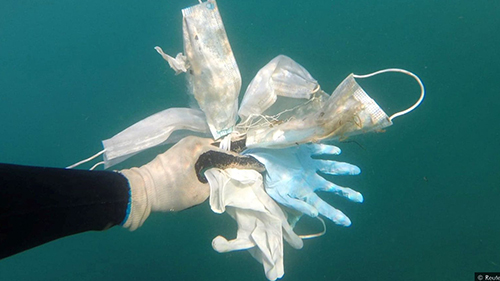
From medical respirators to plastic takeout containers, medical professionals and city leaders are working to mitigate the waste created by COVID-19 in Santa Barbara County. At the Cottage hospitals, 3,400 N95 respirators have been sterilized onsite and are being stored for reuse if needed in the future, according to Maria Zate, manager of public relations at Cottage Health. “Medical waste is handled according to Centers for Disease Control guidelines. Most personal protective equipment [PPE] must […]
Read MoreHave COVID Conditions Affected Trash?
From medical respirators to plastic takeout containers, medical professionals and city leaders are working to mitigate the waste created by COVID-19 in Santa Barbara County. At the Cottage hospitals, 3,400 N95 respirators have been sterilized onsite and are being stored for reuse if needed in the future, according to Maria Zate, manager of public relations at Cottage Health. “Medical waste is handled according to Centers for Disease Control guidelines. Most personal protective equipment [PPE] must […]
Read MoreTelehealth Privacy and Security: Investment and Education are Key
As healthcare organizations do battle against COVID-19, they also must stay on vigilant defense against cybercriminals intent on taking advantage of the crisis to sow chaos and disrupt clinical processes: barraging inboxes with pandemic-themed phishing emails, perpetrating hospital-crippling ransomware attacks, taking aim at public health agencies and vaccine research facilities. Meanwhile, there are new places to safeguard and secure – whether they’re hastily-erected ad hoc field hospitals or massively scaled up telehealth deployments. And fast-expanding […]
Read MoreThe Most Common HIPAA Violations – Can You Avoid Them?
HIPAA (Health Insurance Portability and Accountability Act) violations are quite common and are happening every day – inadvertently or due to lack of proper HIPAA compliance. But why is HIPAA compliance so necessary for the US healthcare system? What does it protect? What are the most common HIPAA violations and what are the consequences? Let’s find out. HIPAA – Why is it necessary? One of the most crucial pieces of information in the US healthcare […]
Read MoreSafe Disposal in the COVID-19 Era
Challenges persist in managing waste for hospitals treating COVID-19 patients and aiming to limit the spread of the virus. Institutions must now complete more steps on-site to safely collect, prepare and dispose of regulated medical and hazardous waste and sharps, while simultaneously protecting workers and the public, according to agency, state and waste hauler guidelines. These recommendations could change further as COVID-19 cases continue in hot spots throughout the United States and personal protective equipment […]
Read More